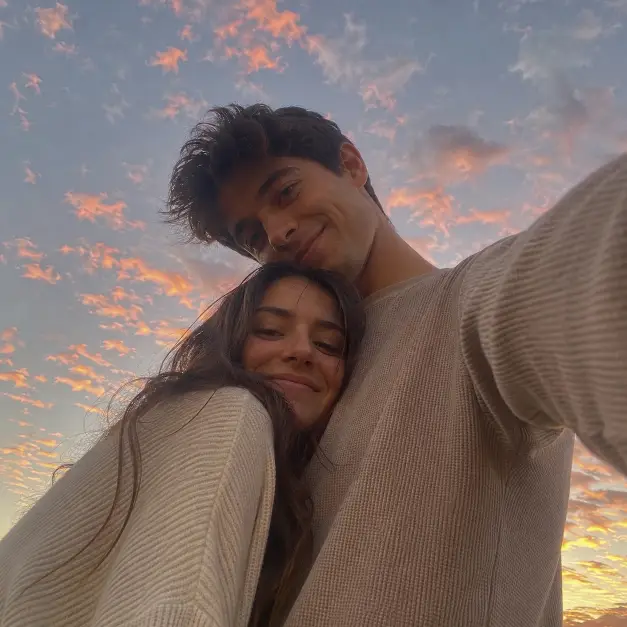
This one makes a photo that looks like the couple took it themselves, not something a photographer set up for them. Arm out, phone tilted, sky behind their heads.
I keep coming back to it because it fakes the casual look really well. Most couple prompts end up stiff and posed. This one does not, and most of that comes down to where the camera sits.
It suits anyone who wants a soft, warm, slightly romantic image for a feed post or a profile picture. Gentle rather than dramatic.
What this prompt is actually asking for
The word candid at the start is doing a lot of work. It steers the result away from the straight on, both faces centered, everyone staring at the lens setup. Without it you usually get something that feels like a studio shot with two models in it.
Phone selfie is the next signal, and it sets the technical character of the whole image. A photo taken at arm’s length on a phone has a specific look, from the mild lens distortion on faces to the way skin reacts to natural light. Naming it early stops the result from drifting toward polished editorial work.
The pose is written in two halves, one for each person. She rests her head on his chest, he leans his head down over hers. That interlocking shape is what makes the image read as affectionate instead of two people just standing near each other.
Both smiling gently matters more than it looks. If you leave expression open, faces tend to come back with wide open mouth grins that clash with the quiet mood. Gently keeps it closed lipped and calm.
The clothing is where the color story lives. A cream ribbed cardigan and an oversized beige waffle textured sweater sit in the same warm neutral family, so the outfits never fight the sunset behind them.
Ribbed and waffle textured are texture words and they earn their place. They give fabric visible surface detail instead of flat blocks of color, which is one of the small things that separates a real looking photo from a plastic one.
Her long dark hair falling forward across her shoulder is a framing detail. It puts a dark shape against the pale clothing and stops the lower half of the frame from going washed out in all that light.
His arm stretched up toward the camera is the piece that sells the whole thing. It is visual proof that one of them is holding the phone. Cut that line and the image often loses its selfie logic and starts looking like a third person took it.
The camera and lighting choices
Low angle means the camera sits below the subjects and points up at them. Here it is stated twice, once as looking up at them and again as held below chin level, which is smart, because a single mention often gets ignored.
Shooting from below does two useful things. It puts open sky behind their heads instead of buildings or trees, and it gives faces that slightly tilted, chin forward angle people naturally end up with in real selfies.
The slight diagonal tilt is deliberate sloppiness. Perfectly level framing reads as planned. A few degrees off reads as someone holding a phone one handed while trying to smile.
Close enough that their upper bodies fill most of the frame sets the crop. You get heads and shoulders, not full bodies, so attention stays on faces and expressions.
Soft ambient sunset light means the light is coming from the whole sky rather than one hard source. Soft light gives gentle shadows with blurry edges, so skin looks smooth and nothing goes harsh.
No flash is a short instruction with a big effect. Flash flattens skin, burns a bright spot into the middle of the frame and kills warm color. Leaving it out keeps those sunset tones on their faces where you want them.
Slightly soft focus and a warm natural phone camera look are the finishing touches. Soft focus here means mild blur across the image instead of a razor sharp result, which is how phone cameras actually behave in dim evening light.
What you will get
Expect a square, warm toned image with two people pressed close together against a pink and orange sky. The overall mood stays consistent between runs. That part is reliable.
The faces are what vary. Every run gives you different people, so if you want a particular look you will need to add age, hair length, skin tone or build to the description yourself.
Hands and the raised arm are the usual trouble spot. An arm stretched toward the lens gets foreshortened, and that shape is hard to get right, so check fingers and the elbow before you use the image anywhere.
The tilt moves around too. Some runs come back barely leaning, others land at a strong angle. If you want more of it, change slight diagonal to a noticeable diagonal tilt.
Cloud detail is the other variable. Sometimes you get smooth even color across the sky, sometimes big defined cloud shapes catching light. Both work, but if you want the dramatic version, ask for scattered clouds lit from below.
Ways to change it
To move away from sunset entirely, swap the background line for a dark blue evening sky with faint stars appearing, and drop the warm color words from the lighting line. The pose survives the change and the mood turns quiet and cool.
For a winter version, rewrite the clothing as she wears a chunky grey wool scarf over a black coat and he wears a dark navy puffer jacket with the hood down. Add faint breath visible in the cold air if you want the season to be obvious.
To make it more playful, replace both smiling gently with both laughing with their eyes half closed. That single change takes the image from tender to fun without touching anything else.
If the low angle feels like too much, change the camera line to read the camera is held slightly above eye level and tilted down. That is the more common selfie angle and it tends to be kinder to faces.
For other platforms, 4:5 gives you a taller feed post with more sky above their heads, and 9:16 fits stories and reels. Square keeps them tight in the frame, which is why I usually leave it alone.
A few things worth knowing
The prompt is descriptive and clean, so it rarely runs into filter trouble. Nothing in it is suggestive, and the clothing is fully described, which helps a lot.
If faces come back looking too smooth and airbrushed, add a line asking for visible skin texture and no retouching. That pushes the result back toward something that looks shot on a phone rather than rendered.
I would also watch the head on chest pose. Sometimes the two heads merge into an awkward shape, and rewriting it as her head resting against his shoulder gives a cleaner separation when that keeps happening.
This is a good base to save and edit rather than rewrite from scratch every time. Change the sky, change the clothes, keep the camera and lighting lines, and it holds up.